TÖRST | THIRST, 2025
a duo exhibition at Ronneby Kulturcentrum, Sept 6th- Nov 2nd, 2025 with artist Sigrid Holmwood ︎
Images © 2026: Anders Bergön, Stephanie Verstift & Linda Persson
THIRST is an exhibition which explores the idea 'is a river alive'. By questioning the capitalist gaze – a gaze that separates humans from nature and reduces nature to a resource, whether it is as a source of power for industry or as something that needs to be saved – Holmwood and Persson want to explore another way of relating: one that acknowledges our bodily entanglement with the river.
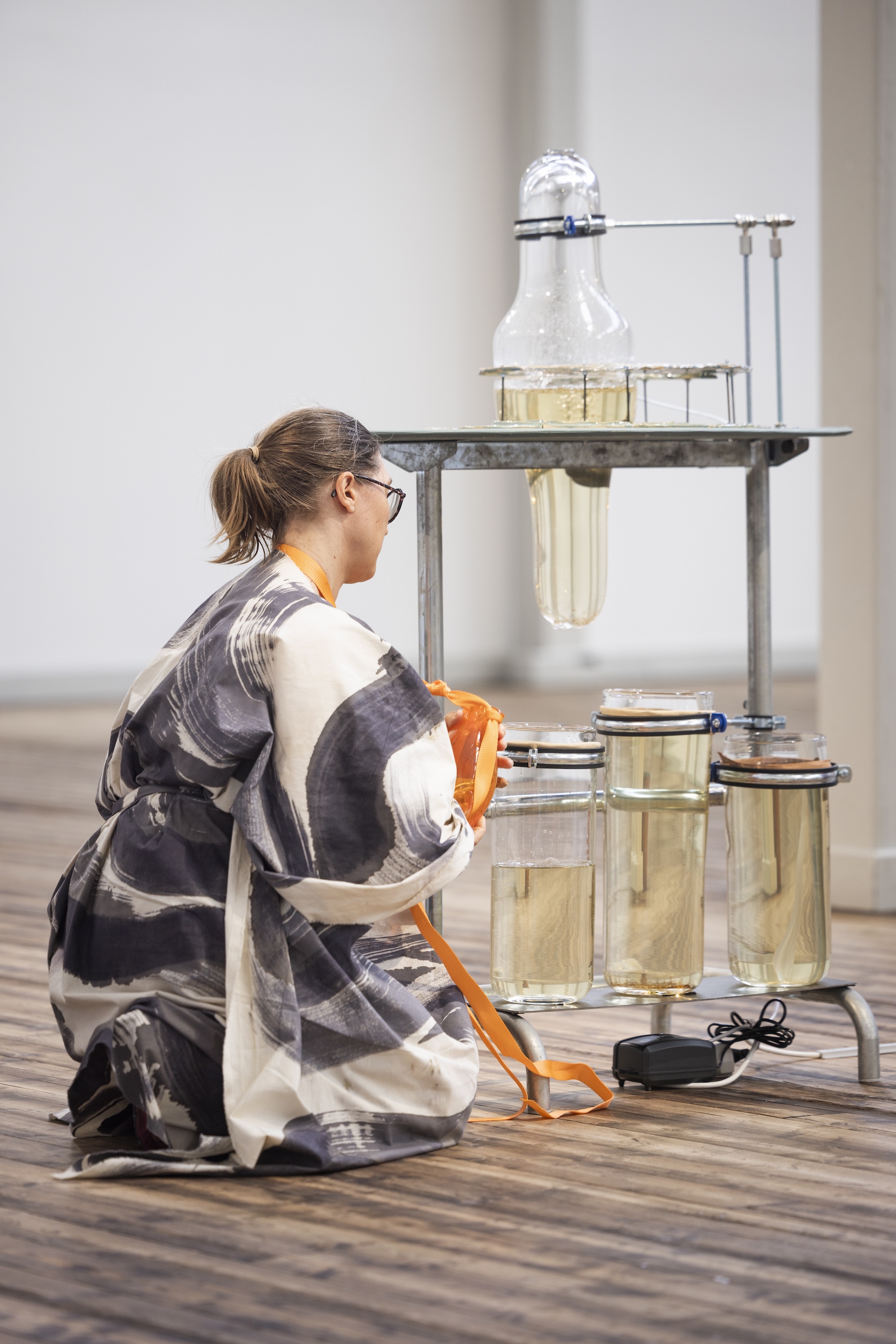
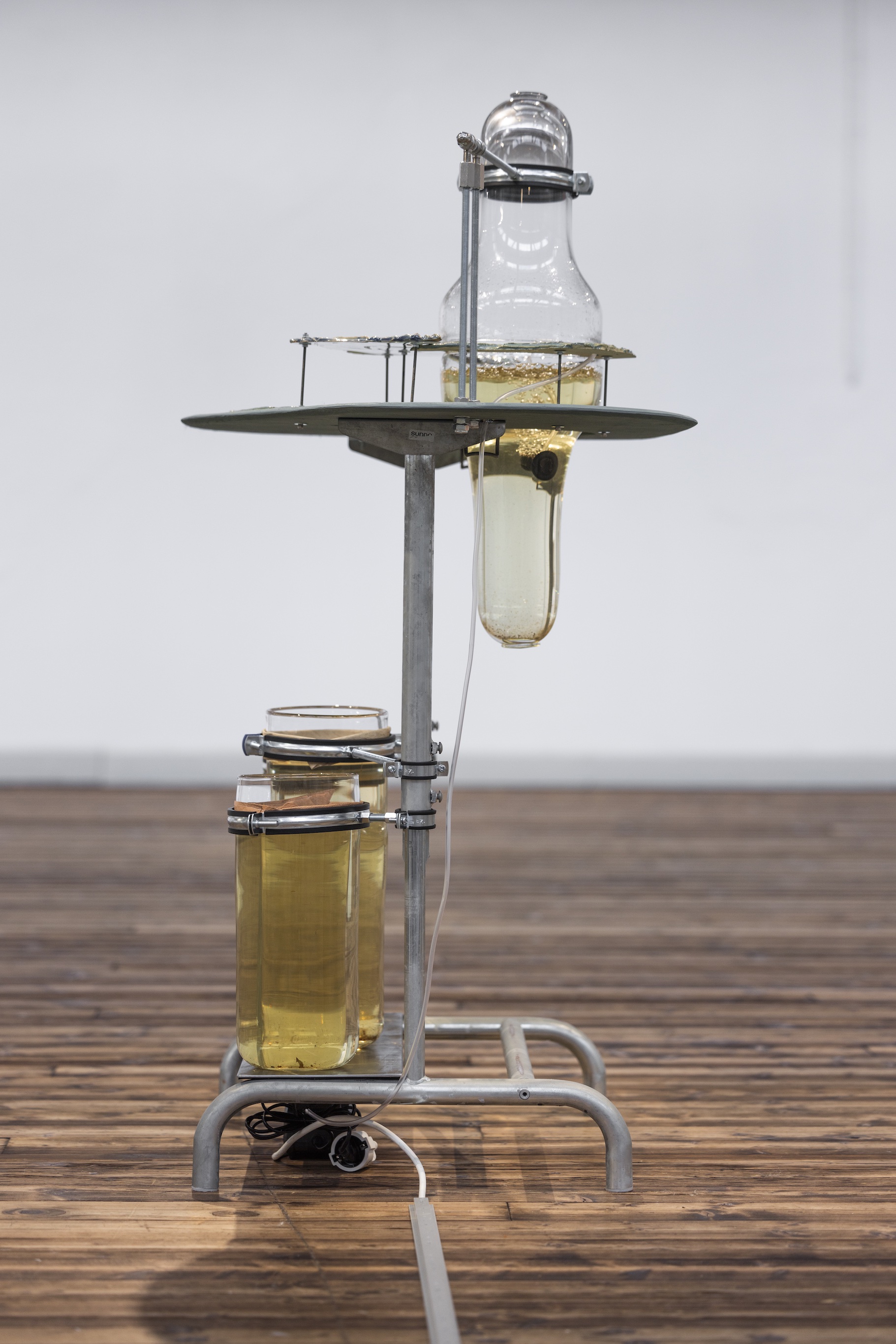

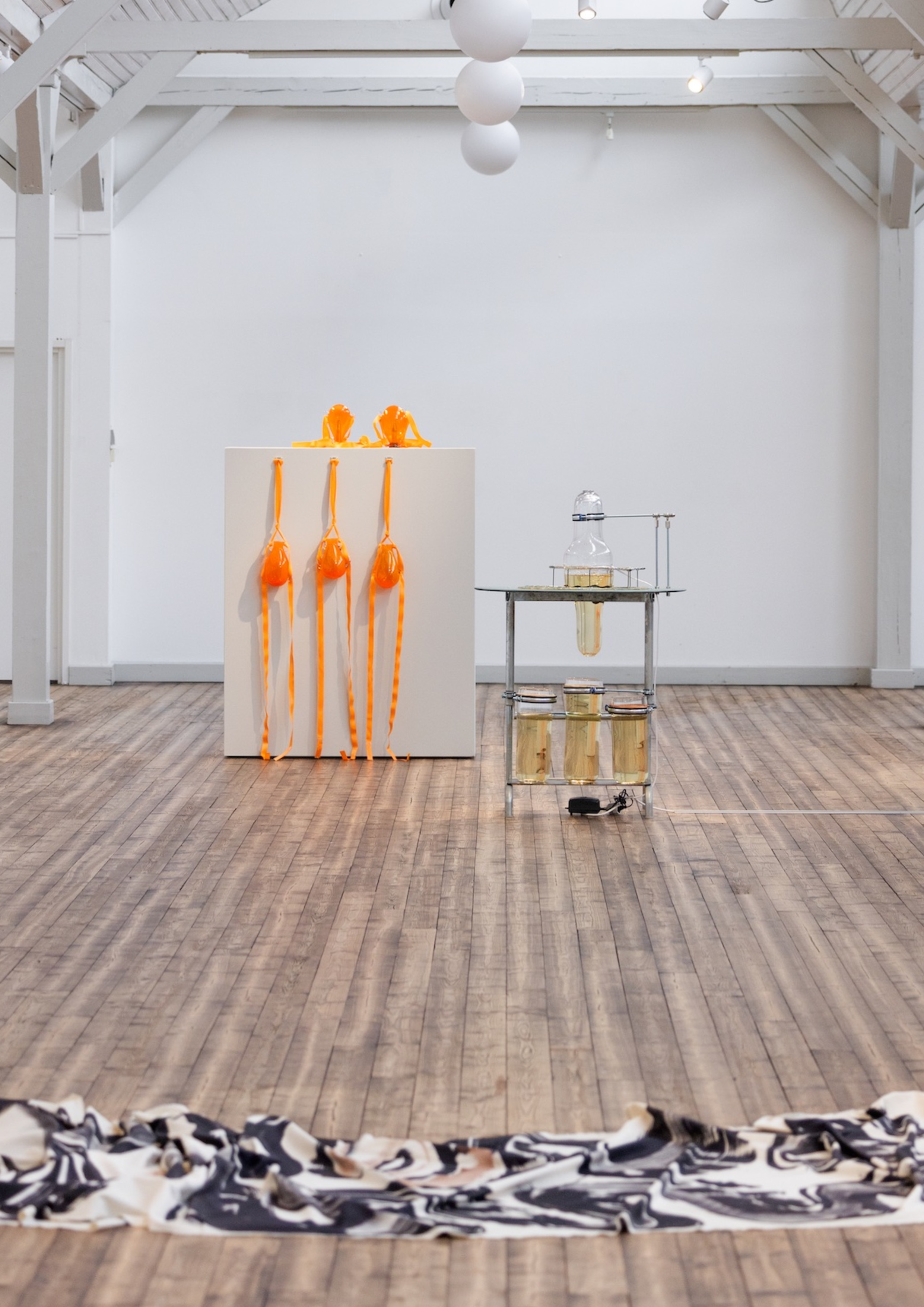
Persson has produced several sculptural nodes inside the exhibition that speaks of the water itself, especially in the piece Ån/ river and Mermaids purse, actually displaying water from the local river in the handblown clear glass cylinders.
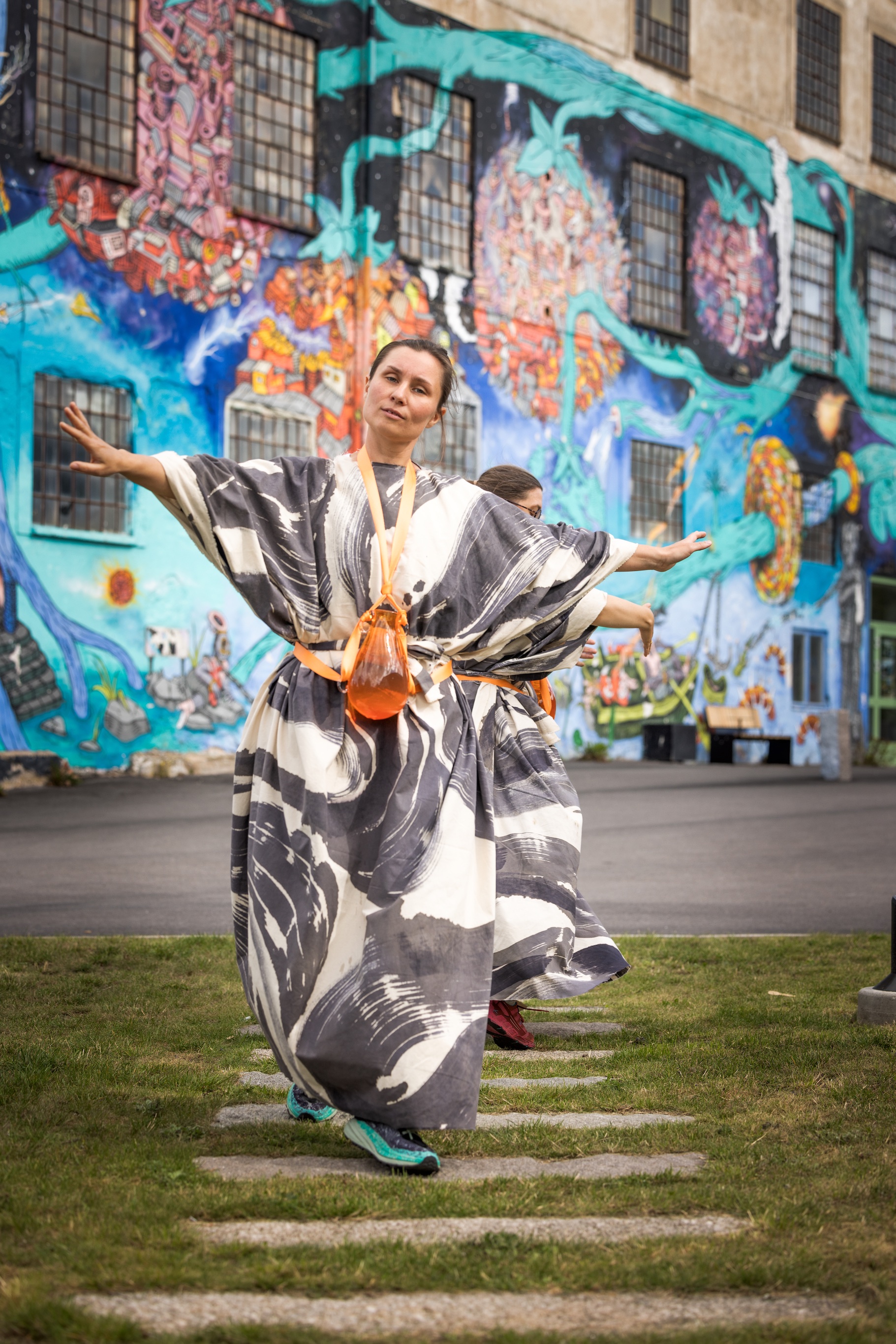
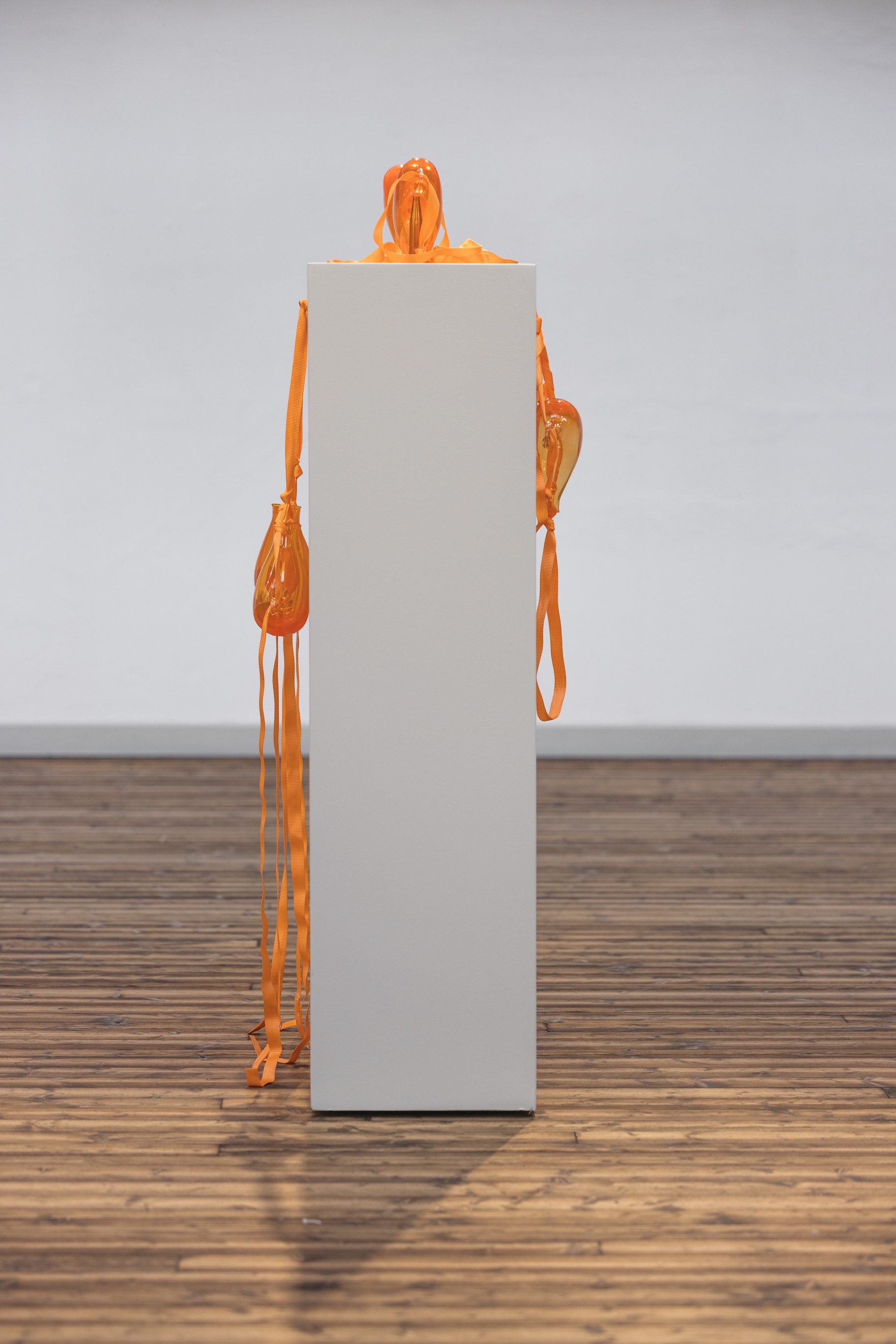
The orange glass vessels (also handblown) ‘Mermaids purse’ were used during the inauguration in a collaboration with the dance collective MASSKOLLEKTIVET ︎, to collect and carry water from the river to the exhibition display.
The orange glass vessels (also handblown) ‘Mermaids purse’ were used during the inauguration in a collaboration with the dance collective MASSKOLLEKTIVET ︎, to collect and carry water from the river to the exhibition display.
Both artists uses an “alchemical” way of working with and through materials that can illuminate different roles water play part; as a solvent and carrier – through chemical processes such as leaching, dissolution and precipitation, as well as in its movement through our bodies. The artworks traces people's deep and historical relationships with waterways by exploring materials and industries, as well as the water itself.
Some sculptures focus on visualising species that falls under the power languages of invasive or belonging like the work Whisperer a large ceramic sculpture adorned with abalone shells, bones, plastic, fish hooks ︎click arrow to see more.
In Persson’s piece 'System' a ceramic piece suspended from the ceiling using tensionstraps, she has placed one of the three cannonballs inside a plastic bucket resting in a handblown glass bowl. With a waterpump the water circulates, slowly eroding the cannonball back to its former consistence of iron dust also known as bog iron, once mined to make the cannonball.
In Persson’s piece 'System' a ceramic piece suspended from the ceiling using tensionstraps, she has placed one of the three cannonballs inside a plastic bucket resting in a handblown glass bowl. With a waterpump the water circulates, slowly eroding the cannonball back to its former consistence of iron dust also known as bog iron, once mined to make the cannonball.
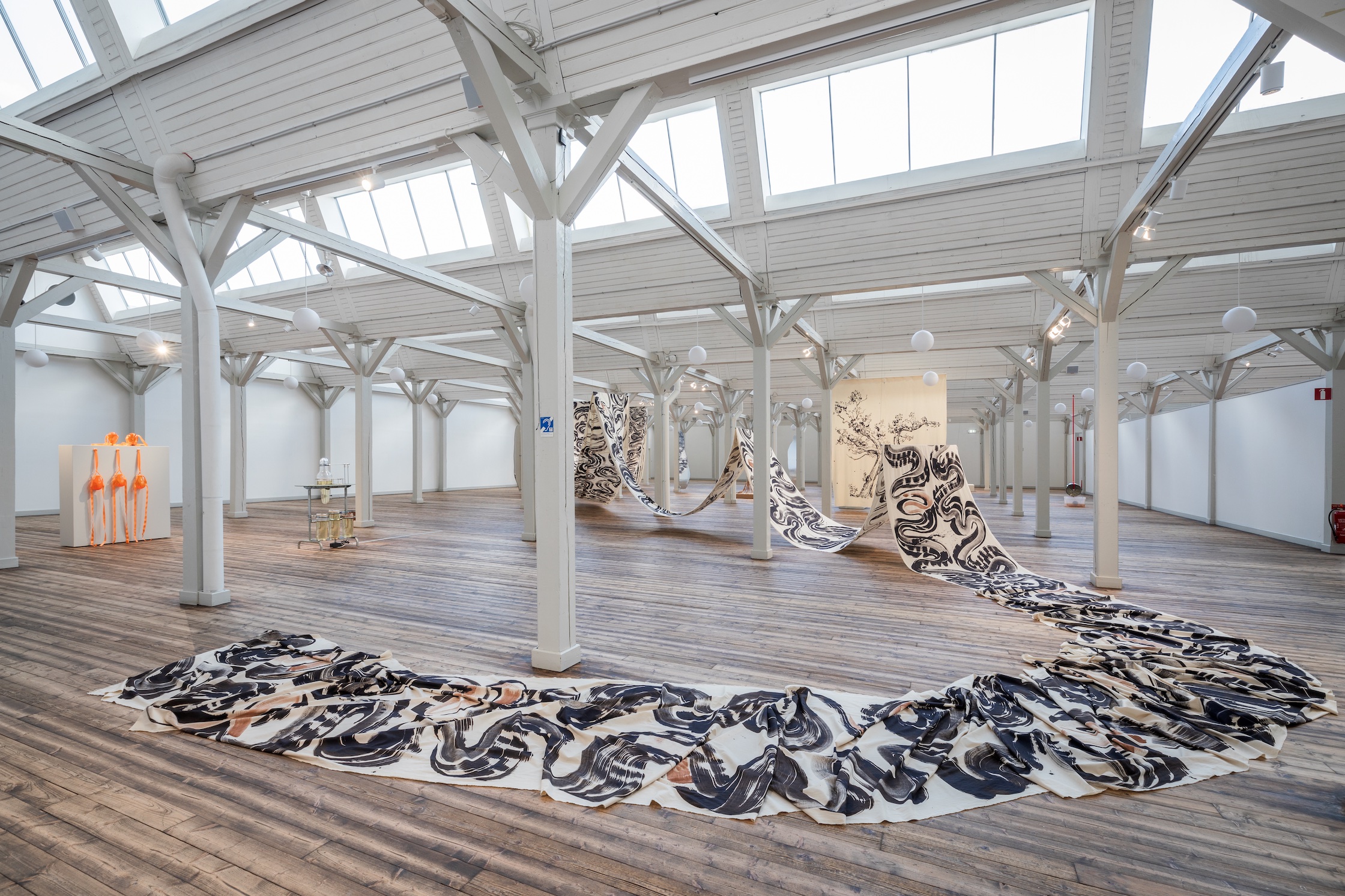
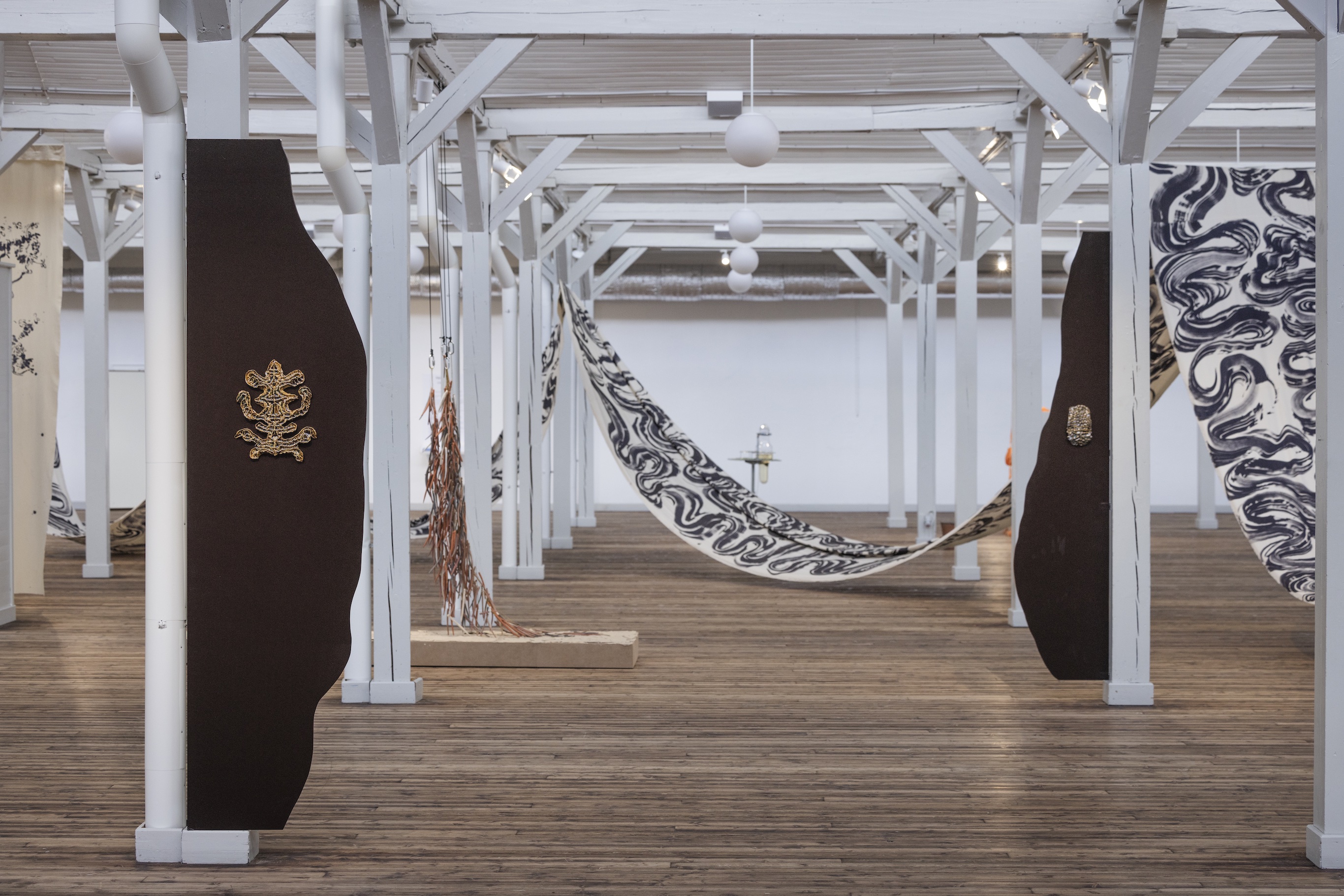
The art works consists of Holmwood’s 60-metre-long fabric prepared with alder tree bark allowing the iron oxide from the cannonballs once made from mining the iron in the river itself, transform from red to black in contact with the brush against the tannins in the fabric. Persson’s sculptures took form engaging material transformations such as iron dust from the cannonballs in the clay to change its colour.
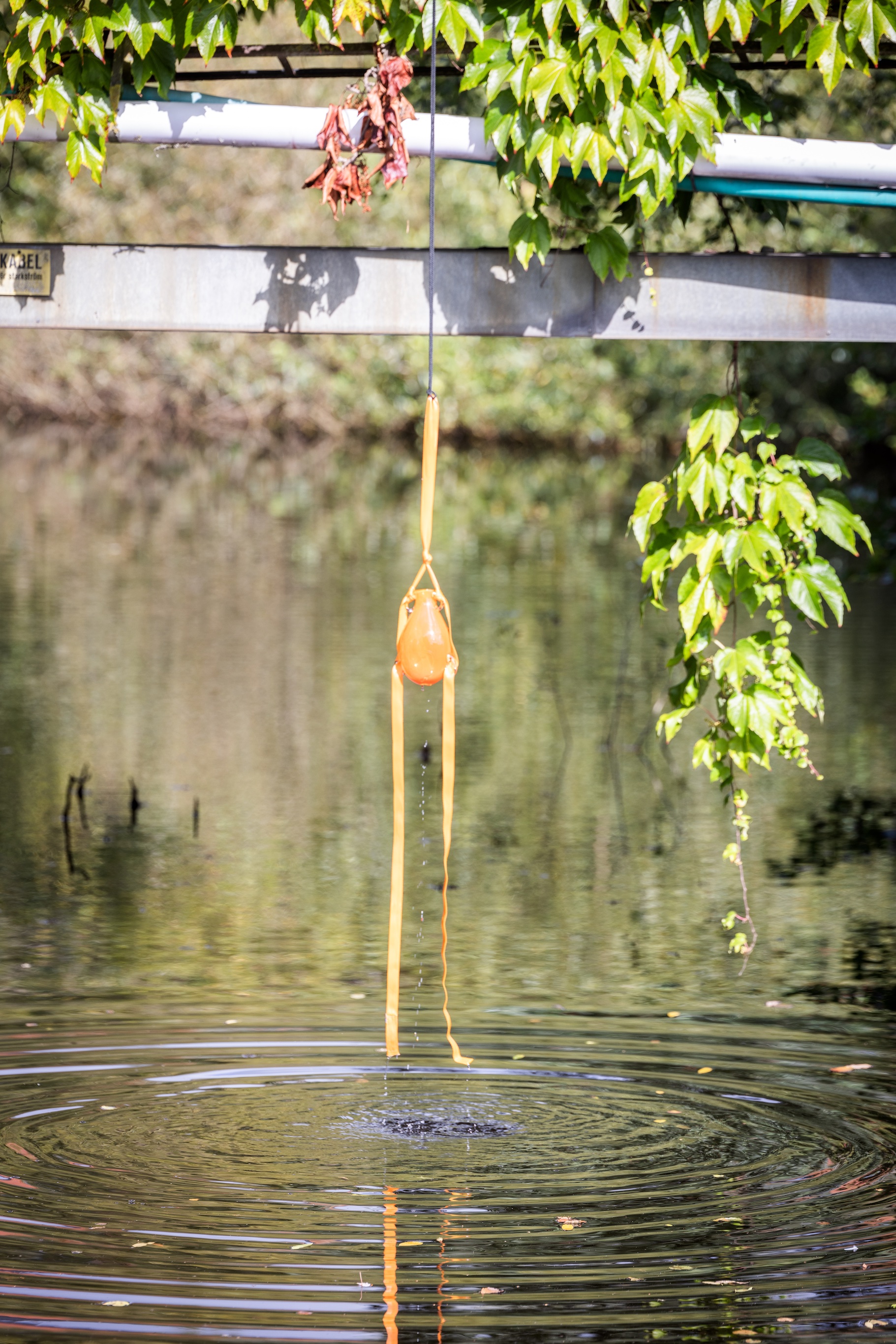
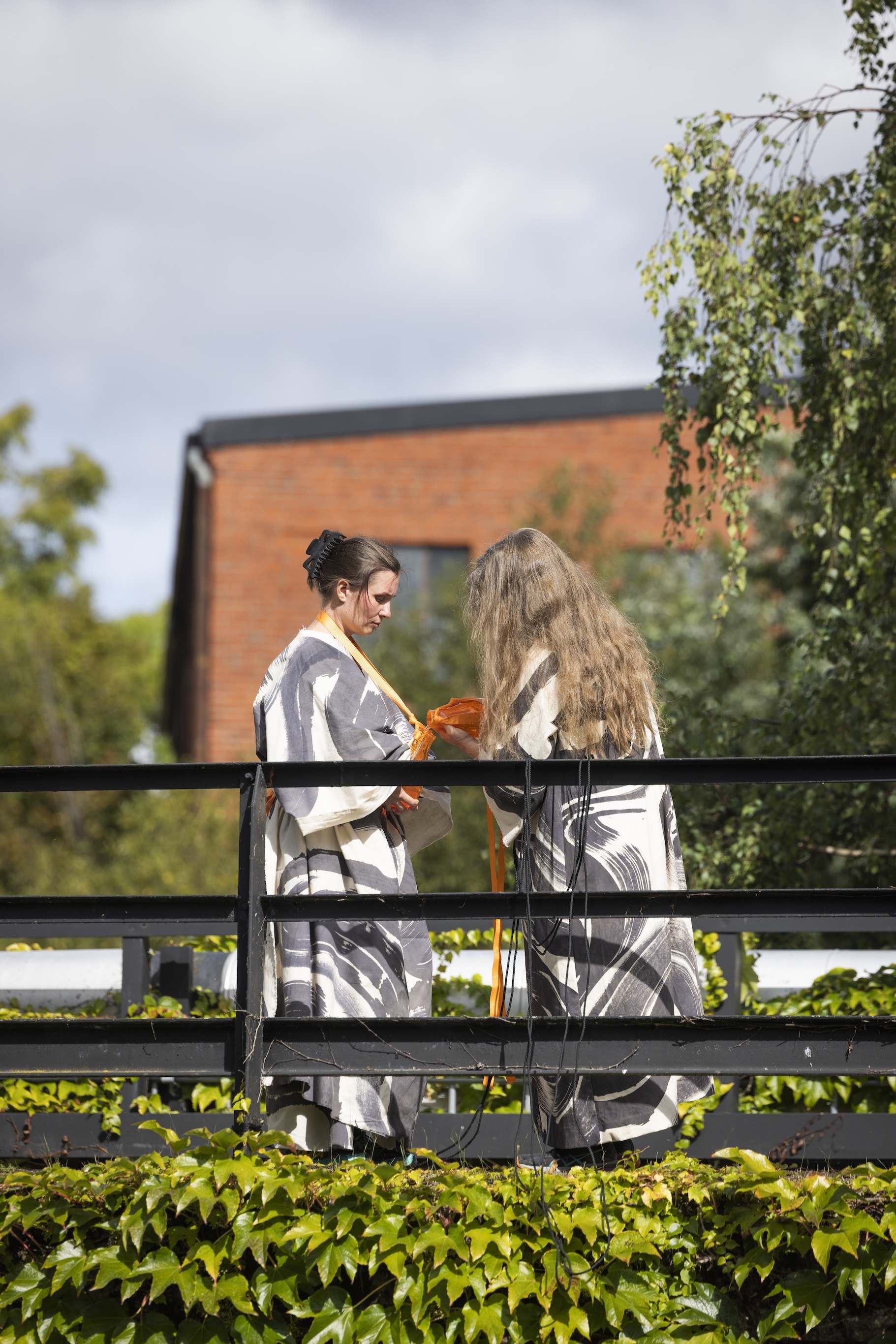
Dance collective MASSKOLLEKTIVET ︎was a collaboration to collect and carry water from the river to the exhibition display. Photos Anders Bergön
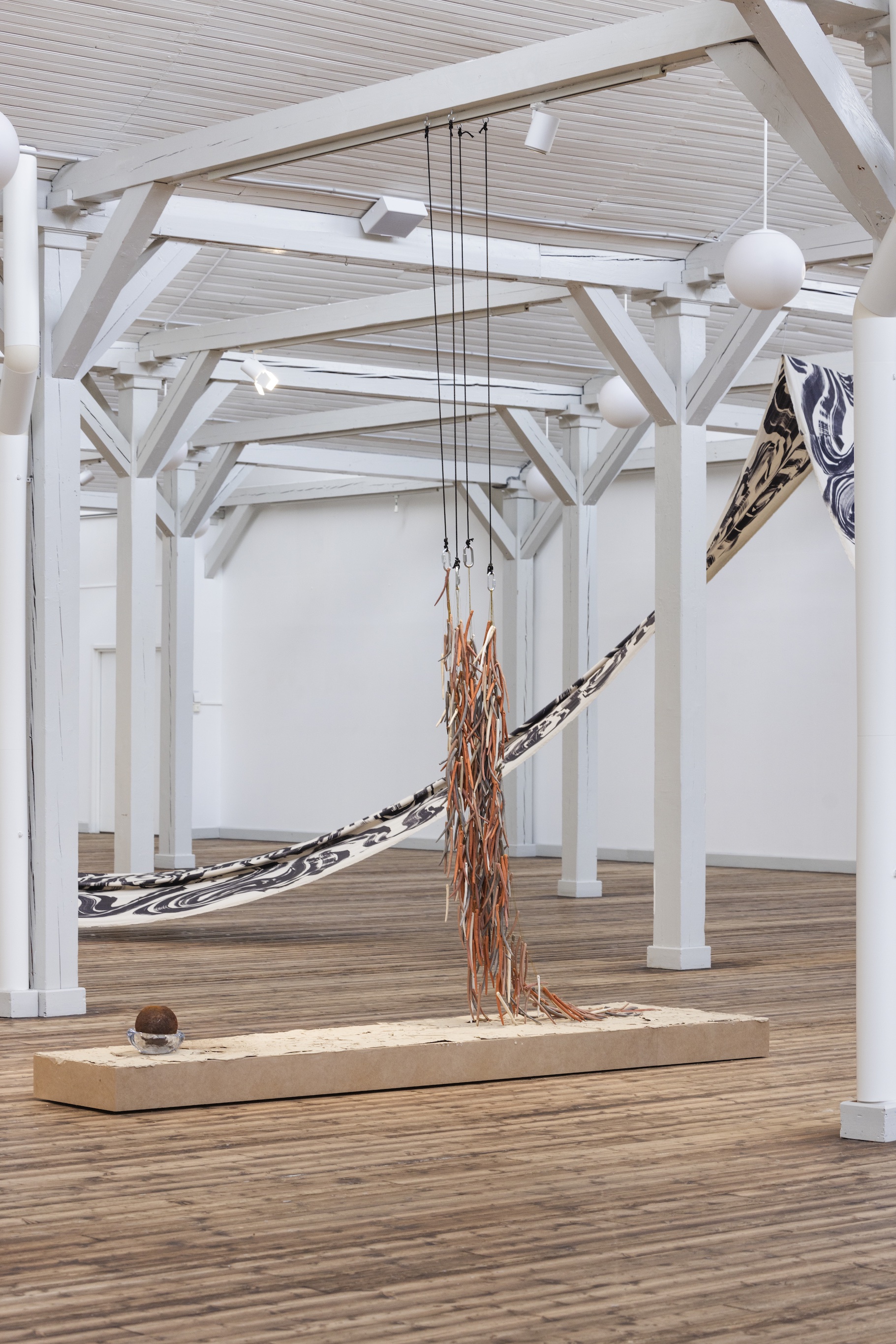
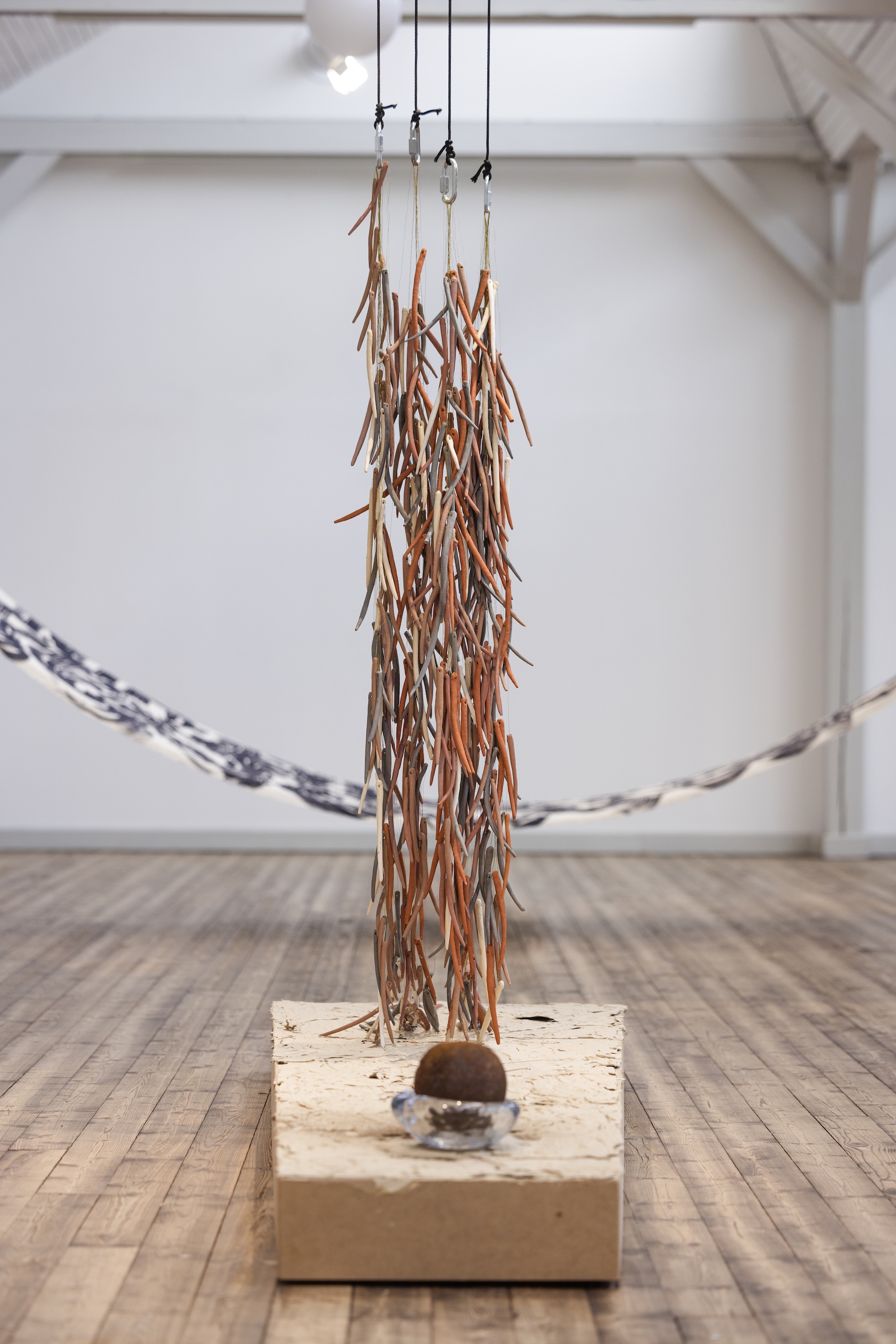



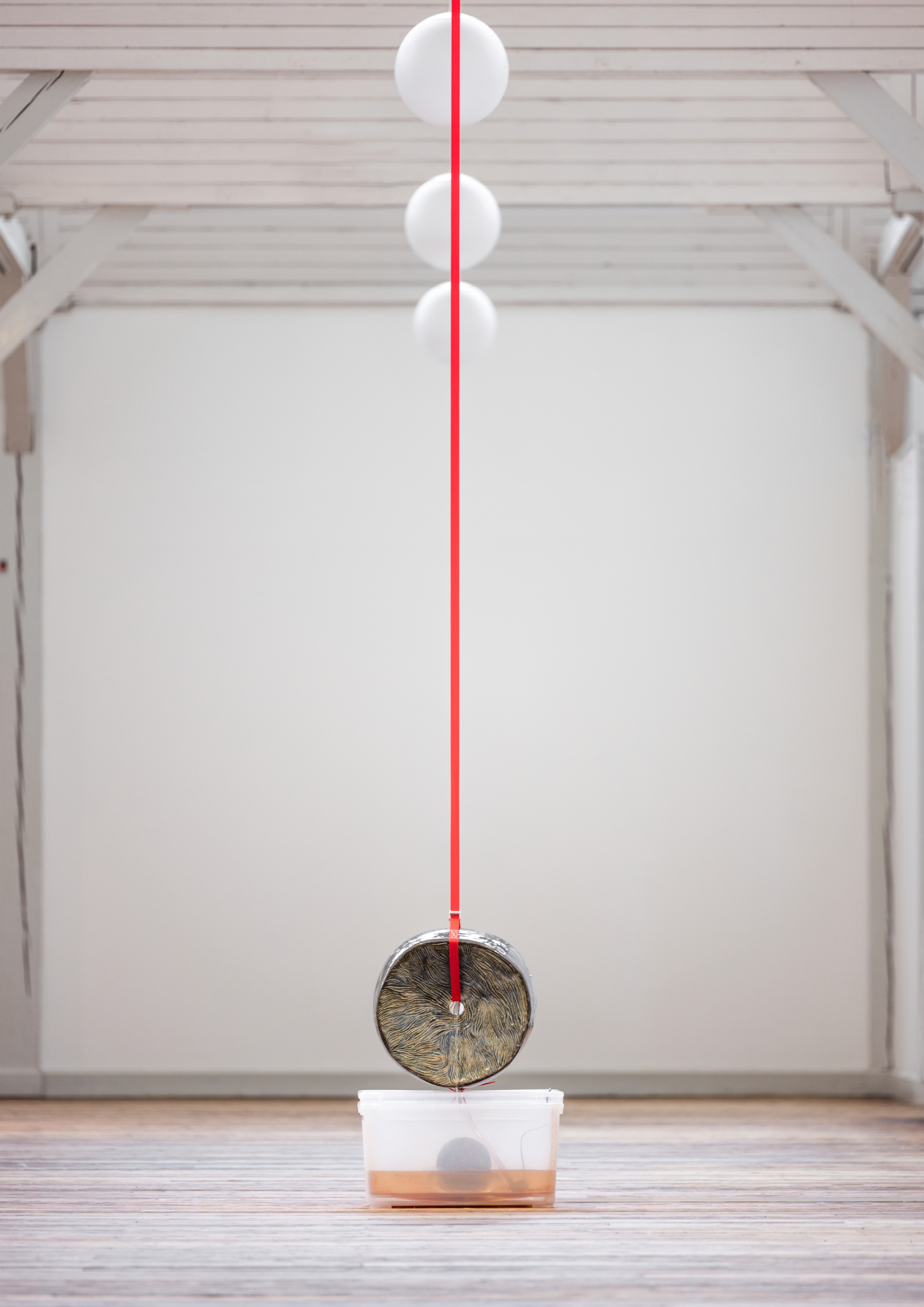
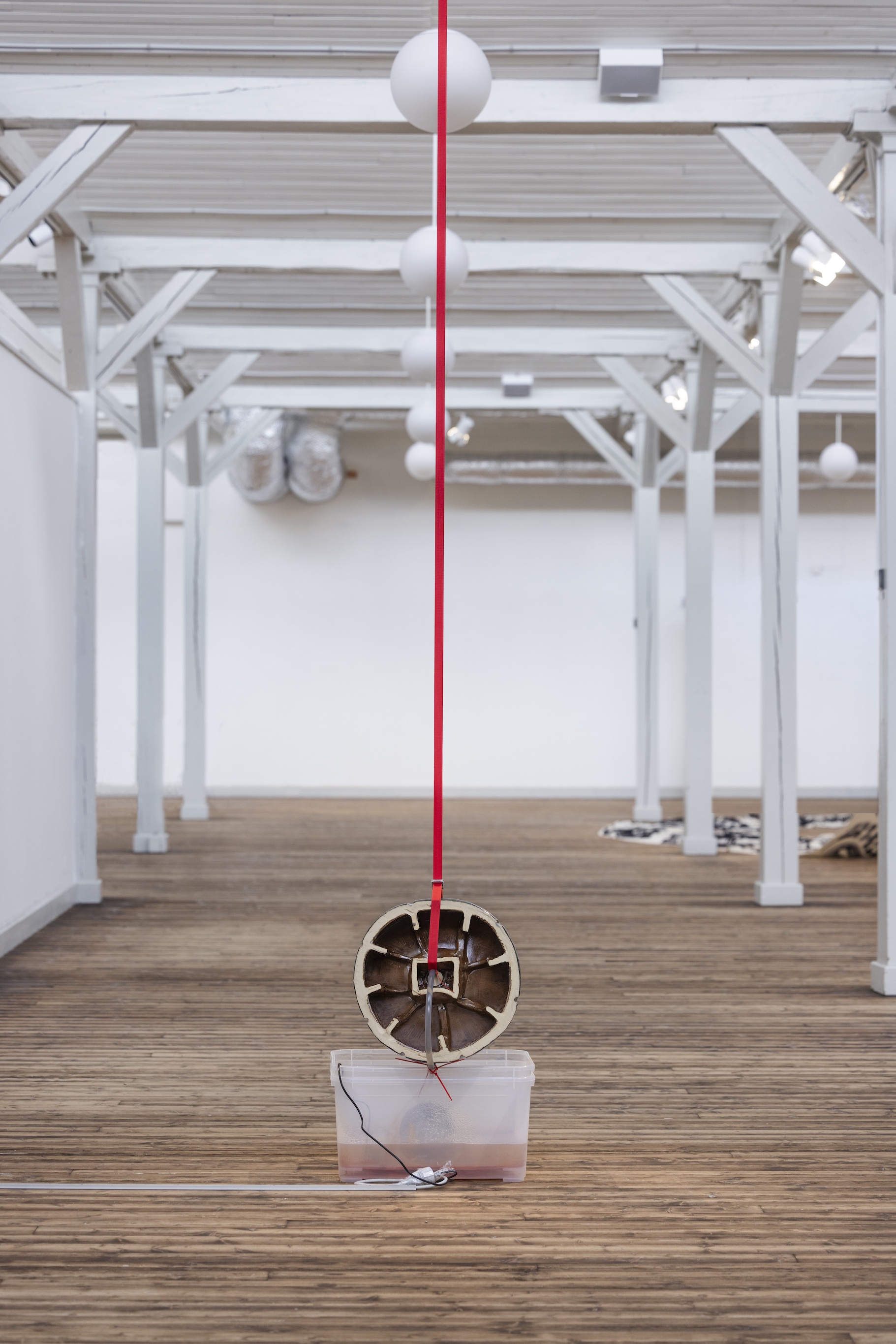
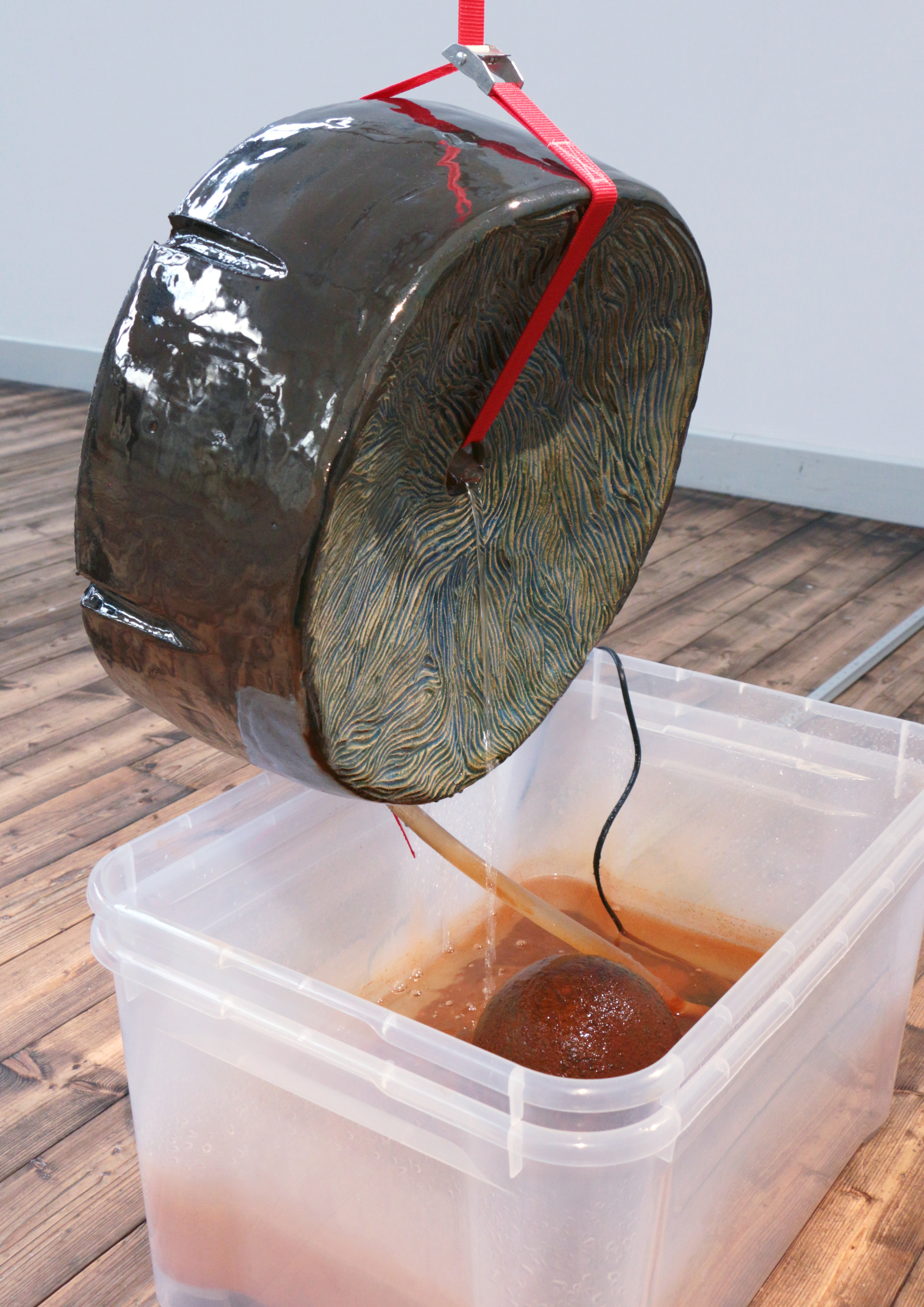
'System' a ceramic piece suspended from the ceiling using tensionstraps, she has placed one of the three cannonballs inside a plastic bucket resting in a handblown glass bowl. With a waterpump the water circulates, slowly eroding the cannonball back to its former consistence of iron dust also known as bog iron, once mined to make the cannonball.
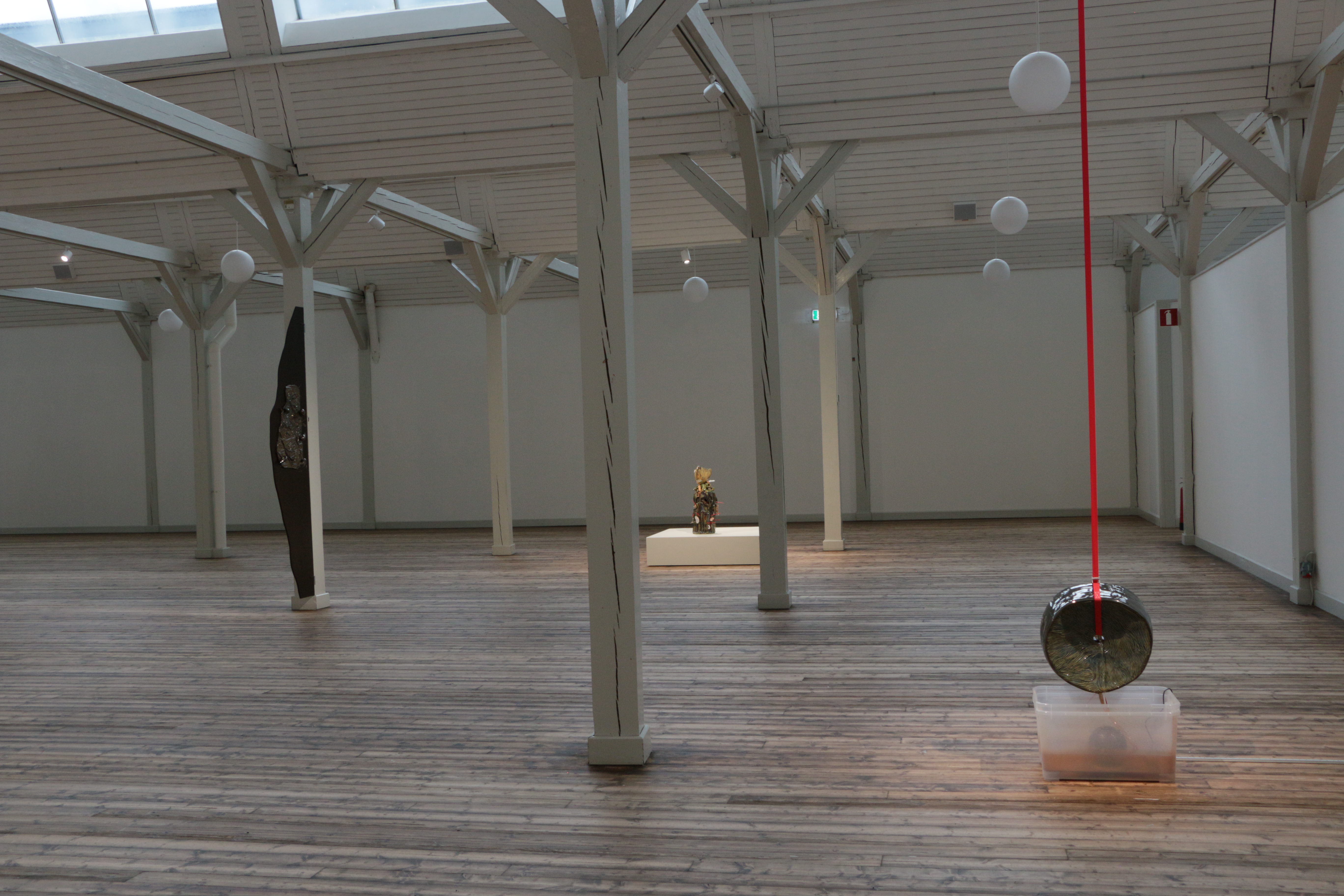

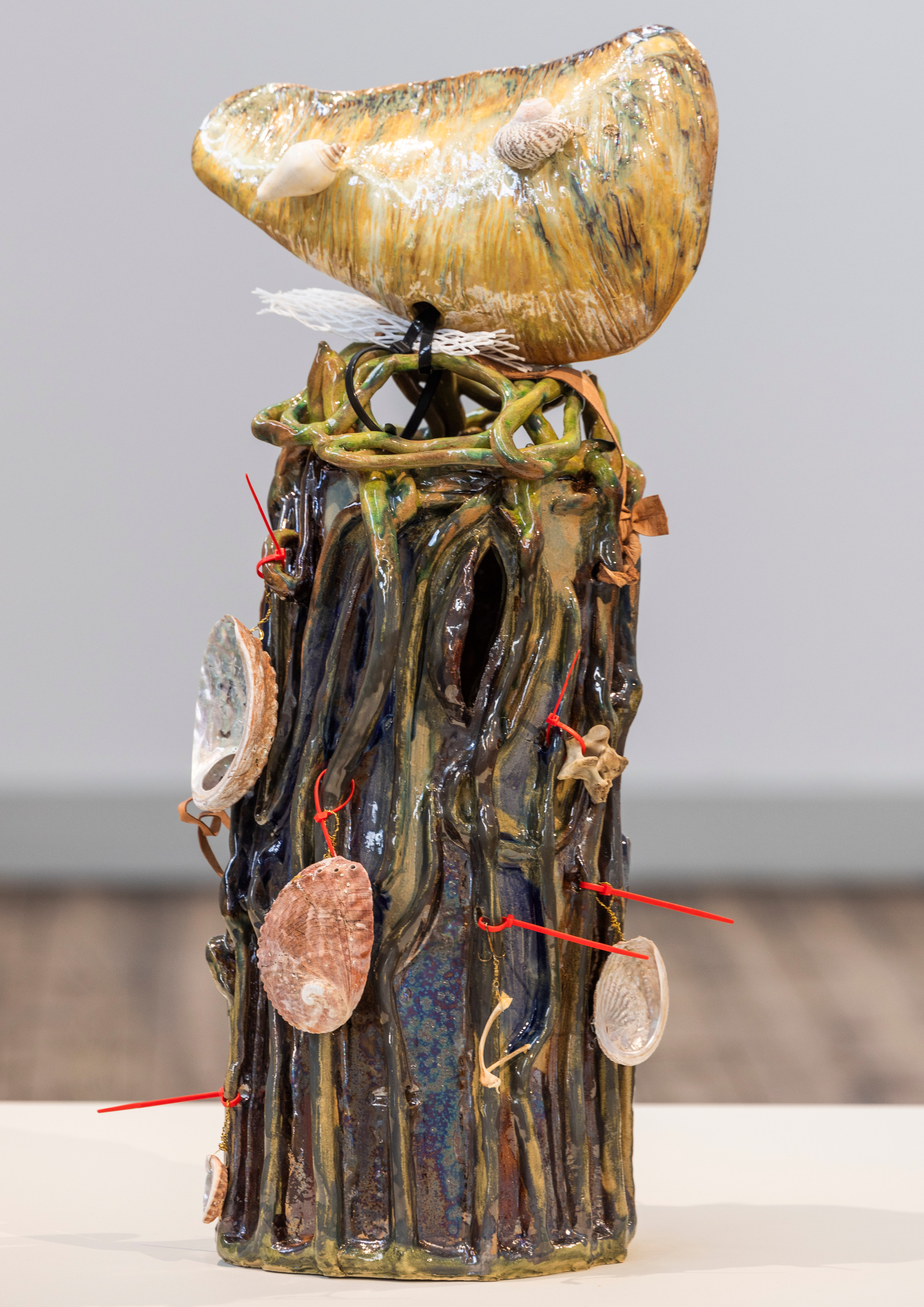
Whisperer a large ceramic sculpture adorned with abalone shells, bones, plastic, fish hooks ︎click arrow to see more.